


Calidades
Towel GSM for High Quality: Which to Choose
Published on 17/07/2026
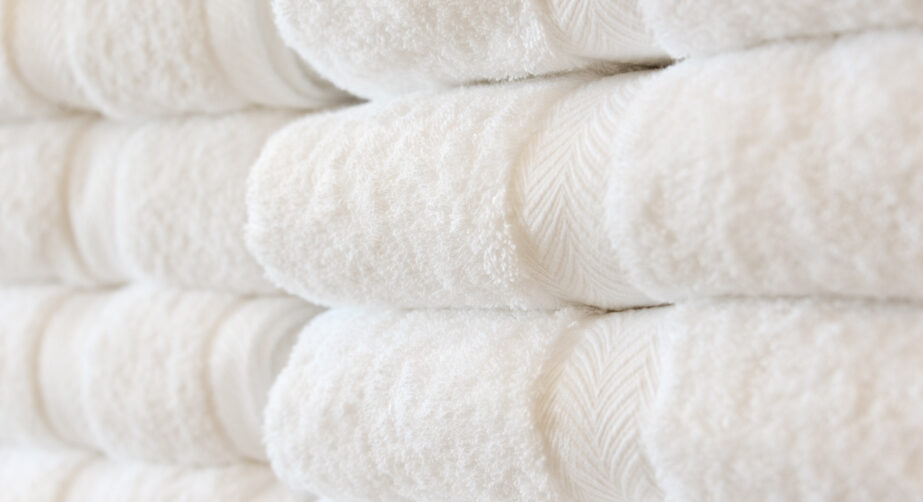
A quality towel is between 500 and 700 g/m². Below 500 g/m² it is light and dries quickly, but offers less absorbency. From 600 g/m² it combines density and softness. Above 700 g/m² it gives a spa sensation, but needs more drying time. Weight is an indicator of good quality, but not the only one: the material, the amount of yarn and the type of pile determine the final result.
Weight is the first figure that appears on a towel label, and the most quoted in buying guides.
What weight a good towel should have
The standard range for high-quality cotton towels is 500–700 g/m². Within that range:
- 500–550 g/m²: correct absorbency, efficient drying. Suited to intensive daily use, or bathrooms with little ventilation.
- 600–650 g/m²: balance between density, softness and absorbency. The range most common in towels for higher-category hospitality.
- 700 g/m² or more: a very dense, enveloping handle, a sensation of volume. Requires more drying time.
Below 400 g/m² the towel is light, but does not offer superior comfort. Above 800 g/m² the weight can become a practical inconvenience, except in spa contexts or a bathroom with a tumble dryer.
What weight means in cotton towels and other pieces
The weight of a towel is the weight of the cloth expressed in grams per square metre (g/m²). It measures the density of the cloth, not the total weight of the piece.
A higher weight indicates more yarn per square metre. More yarn means more absorbency, more density and a better handle. Also more weight when wet, more drying time and greater demand on space, but a more enveloping handle.
Weight applies mainly to cotton towels, which are the standard material for quality bath linen.
Table of towel weights by use and type of establishment
| Weight | Type | Recommended use | Notes |
|---|---|---|---|
| 300–400 g/m² | Light | Gym, beach, travel | Dries quickly; limited absorbency for a domestic bathroom |
| 400–500 g/m² | Medium-light | Basic daily use, hand towels, children | Balance of weight and function for frequent use |
| 500–600 g/m² | Medium-high | Daily domestic bathroom, shower | Optimal range for ordinary use: high absorbency, efficient drying |
| 600–700 g/m² | High density | Premium bathroom, hospitality, guests | Hotel sensation; good absorbency; requires ventilation |
| 700–900 g/m² | Very high | Spa at home, bathroom with a tumble dryer | Maximum comfort; slow drying |
| 300–500 g/m² | Beach/outdoor | Beach, pool, outdoors | Prioritises lightness and portability over deep absorbency |
Towels of 500, 600 and 700 g/m²: differences in material, texture and colour
Cotton towels of 500 g/m²
They are the most practical option for daily use. They absorb well, weigh less when wet and dry in less time. In bathrooms with limited ventilation, or in homes where the towel is used several times a day, they are the most functional choice.
Cotton towels of 600 grams
They are the balance range. They combine high absorbency with a density that conveys good quality to the touch. Towels of 600 grams are the most common in higher-category hospitality and in domestic bathrooms where comfort is the priority. The difference from 500 g/m² shows in the texture: more volume, more weight when dry, more presence on the towel rail.
Cotton towels of 700 g/m²
They offer the experience closest to a spa. The absorbency is very high, the pile very dense and the handle when drying is notably different, very enveloping. The colour and the design at these weights have a more matt finish, with more body.
Why weight is not the only indicator of good quality in cotton towels
A towel of 700 g/m² made with short-staple cotton and a low pile will be less comfortable than one of 550 g/m² made with long-staple cotton, like all the towels found at Matarranz. Weight measures the density of the cloth, not its quality.
The factors that determine the quality of cotton towels are four:
- Type of cotton: the length of the fibres determines the softness and the durability. Long-staple cotton, like the ones we use at Matarranz, usually Egyptian and Pima, creates towels that are softer and stronger than the short-staple standard.
- Amount of yarn and type of pile: a long pile absorbs more and has more volume. A short pile dries faster. The amount of yarn per cm² determines the solidity of the cloth.
- Yarn twist: a well-twisted yarn produces a cloth more resistant to repeated washing. A low-twist yarn gives more initial softness but loses strength over time.
- Seams and finishing: reinforced seams at the edges are a sign of careful manufacture. A well-finished cloth holds its design and its colour through repeated washing.
The type of cotton and the weight must be judged together.
How to choose cotton towels by absorbency, softness and drying
Before buying, it is worth answering three questions:
What is the main use?
Daily bathing, hand towels, towels for hospitality, use in a spa at home, or the beach. Each use has an optimal weight range. For a daily domestic bathroom, the range 500–650 g/m² in cotton towels covers most cases. For hospitality, the range rises to 600–700 g/m² to convey the sensation of good quality the guest expects. What material is the towel?
100% cotton is the standard for quality bath linen. Within cotton, the long staple in Egyptian cotton or Pima offers better results.
Checklist before buying cotton towels for the bathroom
- Weight between 500 and 700 g/m² for good-quality domestic use.
- Material: 100% cotton, preferably long staple. Reinforced seams at the edges (resistance to repeated washing).
- Uniform colour and design, with no loose threads at the seams.

Common mistakes when choosing towels by weight
- Choosing the highest weight in the belief that it always indicates better quality. A towel of 800 g/m² in a bathroom without ventilation ends up being uncomfortable because of the drying time.
- Confusing thickness with quality. Visual thickness can be down to a long pile that is not dense. Real weight is measured in weight per square metre, not in apparent volume.
- Not checking the material. A high weight with short-staple cotton produces a towel that is heavy but not durable, and mediocre to the touch.
- Buying without considering the type of establishment or the use. A towel of 700 g/m² is unsuitable for the gym or for travel. One of 350 g/m² gives no comfort in a domestic bathroom.
Ignoring the seams and the design of the pile. Two towels with the same weight and the same colour can behave very differently if one has a long, well-twisted pile and the other a short, loose one.
Which cotton towel to choose for the bathroom
For a domestic bathroom where the experience matters, the range 600–650 g/m² in long-staple cotton towels is the right starting point. It offers high absorbency, a dense texture and a durability that justifies the investment.
The difference between a good towel and high-quality towels that are soft and durable is not only in the weight: it is in how it is made. A towel made with selected cotton, a quality pile, reinforced seams and careful finishing keeps its properties through years of repeated washing.
At Matarranz we have selected 100% cotton towels of high weight and long staple since 1911. Discover the towel collection and see the options available by use and finish.
Frequently asked questions about the weight of high-quality towels
What weight should a good bath towel have?
A good bath towel for domestic use is between 500 and 700 g/m². The 600–650 g/m² range is the most balanced: high absorbency, notable density and acceptable drying in well-ventilated bathrooms. Below 500 g/m² the towel is functional but lighter. Above 700 g/m² comfort and envelopment are at their maximum, although drying requires more time.
What weight do towels for high-end hospitality have?
Towels for hospitality vary according to the type of establishment. In higher-category hotels the usual weight is between 600 and 700 g/m², with long-staple cotton to maximise the handle and the absorbency.
Is a towel of 500 or of 700 grams better?
It depends on the use. A towel of 500 g/m² is more practical for intensive daily use or bathrooms with little ventilation: it dries faster and weighs less when wet. One of 700 g/m² offers more comfort and a sensation of volume, but needs adequate drying conditions. If the bathroom has good ventilation or a tumble dryer, the 700 g/m² is the better option.
Does a higher weight mean better quality?
Not necessarily. Weight measures the density of the cloth, not the quality of the cotton used. A towel of 700 g/m² with short-staple cotton can be less durable and less absorbent than one of 550 g/m² with long-staple Egyptian cotton. Quality depends on the weight, the type of cotton, the fibres of the pile and the making.
What weight does a good beach towel have?
For beach towels, the optimal range is between 200 and 400 g/m² 【3】. The priority in this use is lightness and ease of carrying, not density. A beach towel of 280 g/m² in combed cotton, like our Marine towel, dries quickly, weighs little and keeps excellent absorbency for outdoor use.