

Fabrics & Fibres
What Mohair Is
Published on 20/05/2026
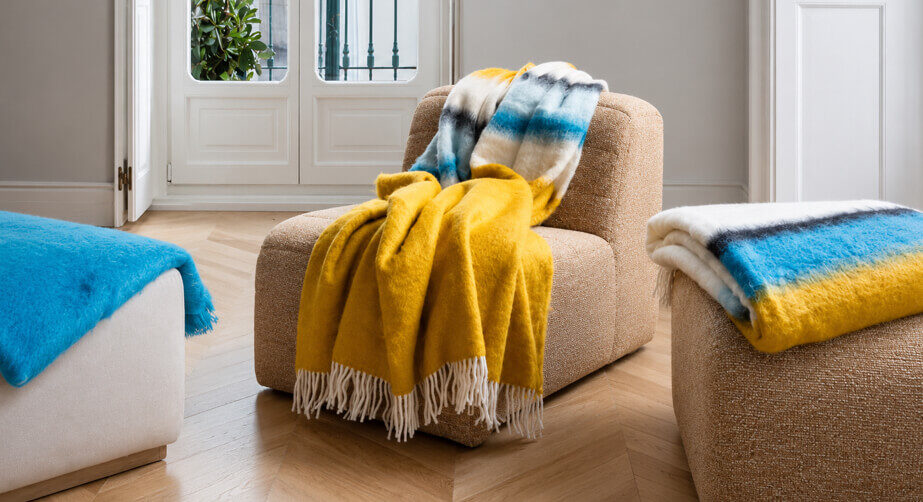
Mohair is one of the most widely recognised natural fibres in high-quality textiles: lustre comparable to silk, exceptional softness and warmth, at a reduced thickness.
Where Does Mohair Come From, and Which Animal Produces It?
Mohair wool comes from the Angora goat, a breed originating in the region of Ankara, in Turkey, where it was bred and selected over centuries for the quality of its fleece. The goat is shorn twice a year, producing 3 to 5 kilograms of fibre per animal per season — a significantly higher yield than cashmere.
South Africa accounts for 50% of world production, followed by the United States (Texas) and Argentina. The Mohair South Africa Council and the International Mohair Association (IMA) set the standards for quality and grading.
What Are the Properties of Mohair?
Lustre Comparable to Silk
The mohair fibre has very flat scales that reflect light evenly. This natural lustre is the most recognisable characteristic of the cloth: it sets mohair apart visually from sheep’s wool, which finishes matt, and it has a presence of its own without any additional treatment.
Softness, Lightness and Elasticity
First-grade mohair — from young animals — has a diameter of between 25 and 30 microns: fine, and soft in contact with the skin. Its structure gives it greater elasticity than standard sheep’s wool; the cloth recovers its shape without matting. The fibre is hollow: it traps air efficiently and gives considerable warmth at a reduced thickness.

What Is the Difference Between Mohair, Wool and Cashmere?
| Characteristic | Mohair | Sheep’s wool | Cashmere |
|---|---|---|---|
| Origin | Angora goat | Sheep (merino and others) | Cashmere goat |
| Diameter | 25–45 microns | 17–24 microns (merino) | 13–19 microns |
| Lustre | Very high — similar to silk | Low to medium | Low to medium |
| Lightness | High | Medium | Very high |
| Durability | Medium | High | Medium |
Cashmere surpasses mohair in softness, but its production is far more limited. Mohair offers greater lustre and elasticity, and its care is similar.
What Is Mohair Used For?
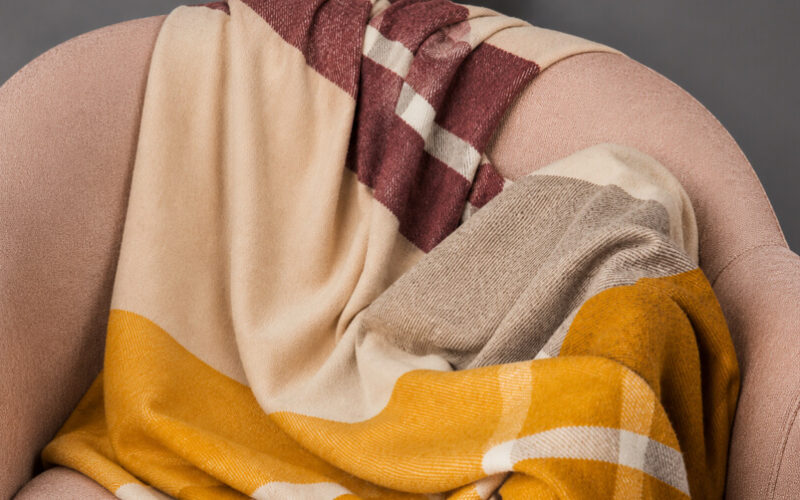
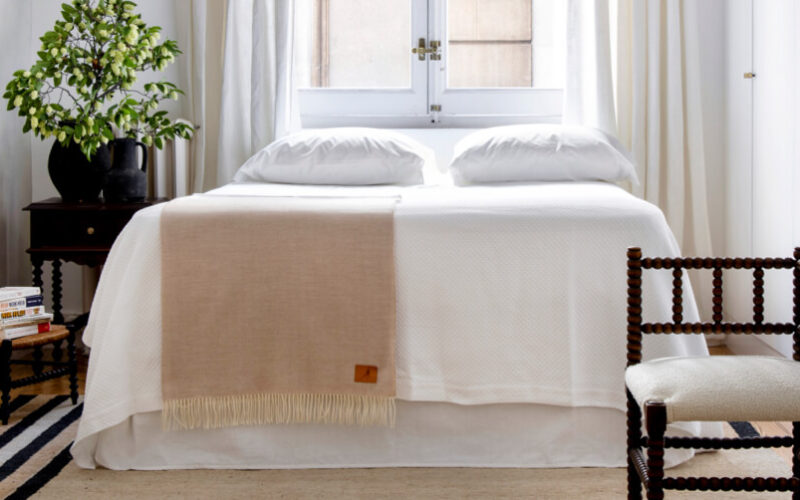
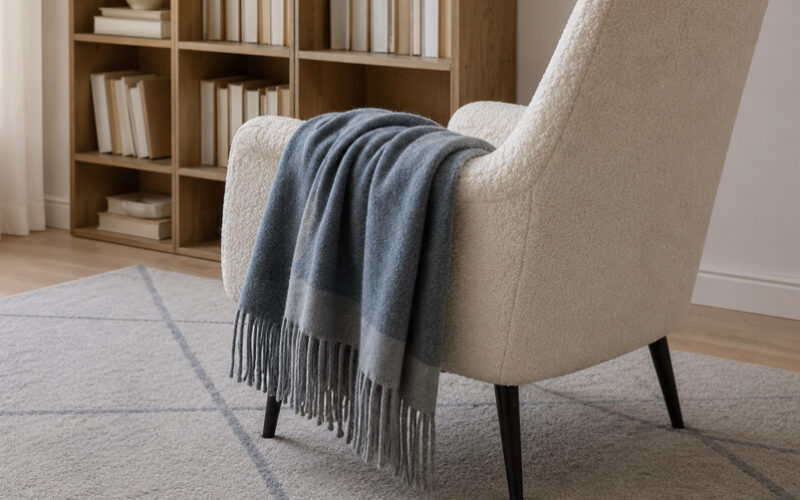
- In home textiles it is found in blankets and high-quality bedspreads: mohair is one of the reference materials in luxury blankets for residential and hospitality use.
- In luxury hospitality, mohair blankets are common in high-end suites: lightness, warmth and visual presence in a single material.
How Is Mohair Cared For?
- Washing: by hand in cold water, or a delicate cycle at 30 °C maximum, with a neutral detergent made for delicate fibres. Hot water shrinks the fibre irreversibly.
- Drying: flat on a horizontal surface, never in a tumble dryer and never hung.
- Storage: folded, somewhere dry and well aired, with moth protection for long periods.
You will find our blanket catalogue in our online shop.

Frequently Asked Questions About Mohair
Does mohair itch?
First-grade mohair — under 30 microns in diameter, from young animals — does not cause itching in most people. Grades above 35 microns can be less comfortable in direct contact with sensitive skin. In home textiles the contact is usually indirect, so this matters less.
Is mohair warmer than wool?
They give a comparable level of warmth, but mohair delivers it at less thickness and weight.
How do you identify good mohair?
Even lustre, a soft handle with no harshness, and good shape recovery after the cloth is stretched. The label should state the percentage of mohair: a cloth at 100% mohair, or above 70%, guarantees the characteristic properties of the fibre.