

Fabrics & Fibres
The Difference Between Egyptian Cotton and Regular Cotton
Published on 10/04/2026
The difference between Egyptian cotton and regular cotton lies in the length of the fibre. Egyptian cotton, grown in the Nile Delta, produces extra-long fibres that make finer yarns, softer cloth and greater durability. Conventional cotton, mainly of the Upland variety, has fibres of standard length and gives a functional performance. In bed linen, the difference between Egyptian cotton and regular cotton is one of the most important factors to consider when assessing softness, durability and how the fabric performs over time.
What Is Egyptian Cotton, and Why Is It Considered Higher Quality?
Egyptian cotton is a variety of extra-long-staple cotton grown mainly in the Nile Delta. The particular conditions of that region — temperature, humidity and alluvial soil — favour fibres beyond 34 millimetres in length, significantly longer than those of conventional cotton. A longer fibre allows finer spinning, producing cloth that is smoother, stronger, and more than 20% better at absorbing moisture than standard cotton.
Three reliable references exist for verifying authenticity: certification from the Cotton Egypt Association (CEA), the specification “extra-long staple” or “ELS” on the label, and manufacturers with verifiable supply-chain traceability.
What Is Regular Cotton?
The term covers mainly the Gossypium hirsutum variety, known as Upland cotton, which accounts for roughly 90% of world production. It is grown in the United States, India, China and Brazil, with fibres between 22 and 28 mm in length. For standard residential bed linen it performs acceptably; in luxury hospitality, or wherever handle and durability are decisive, the differences between varieties become determining.
Key Differences Between Egyptian and Regular Cotton
| Characteristic | Egyptian cotton | Regular cotton (Upland) |
|---|---|---|
| Fibre length | Extra-long (> 34 mm) | Short to medium (< 28 mm) |
| Softness of the cloth | Exceptional, improves with washing | Acceptable, stable |
| Durability | High — withstands heavy use and washing | Moderate |
| Moisture absorption | Up to 20% higher | Standard |
| Natural lustre | Silky, even | Matt or slightly dull |
| Origin | Nile Delta, Egypt | United States, India, China |
| Recommended use | High-quality bed linen, premium hospitality | General domestic use |

Thread count is a useful indicator but not a sufficient one on its own. An Egyptian cotton cloth at 400 threads surpasses an Upland one at the same count in softness and durability: the longer fibre spins finer without losing strength.
Which Type of Cotton Is Best for Sheets?
For high-quality cotton bed linen, extra-long-staple Egyptian cotton is technically superior in softness, durability and moisture absorption. It suits high-density percale and sateen particularly well, where the quality of the fibre translates directly into the handle and into how the cloth behaves after repeated washing.
Egyptian Cotton in Hospitality and the Professional Sector
Bed linen for hospitality takes heavy wash cycles. Egyptian cotton pieces keep their softness and their appearance after hundreds of industrial launderings; those in short-staple or regular cotton tend to lose their properties and wear out with use and washing.
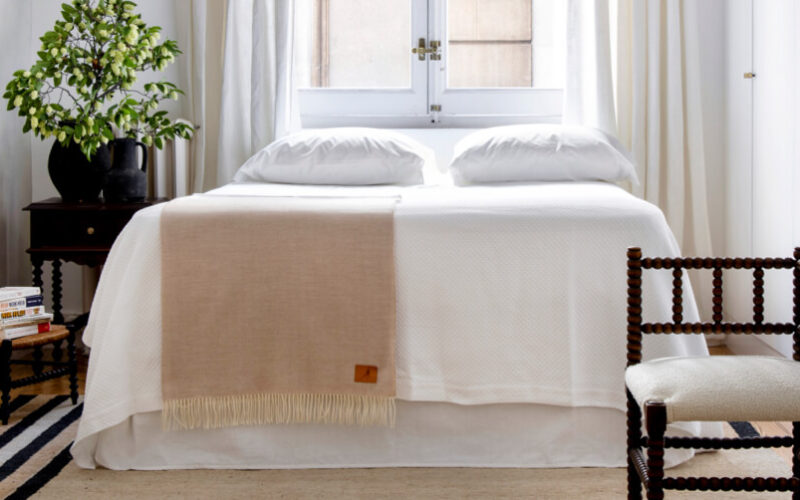
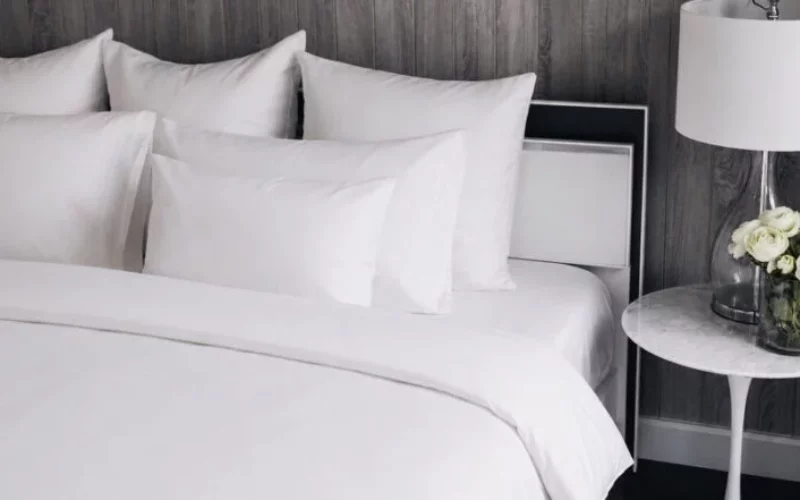
You can see our bed linen catalogue in our online shop. At Matarranz we select the finest qualities of Egyptian cotton in percale and sateen structures, and we make sheet sets to measure in our Madrid workshop, as we have since 1911.

Frequently Asked Questions About Egyptian and Regular Cotton
Is Egyptian cotton better than regular cotton?
Extra-long-staple Egyptian cotton surpasses conventional cotton in softness, durability and absorption
How long do Egyptian cotton sheets last?
Well-made Egyptian cotton sheets keep their properties for 7 to 10 years with the right use and washing. The extra-long fibre stands up to friction and to wash cycles better than short-staple varieties, which tend to deteriorate visibly before three years of heavy use.
How do you tell percale from sateen in Egyptian cotton?
Percale is a flat-weave cloth: cool to the touch, matt and highly breathable, recommended for warmer climates. Sateen has a diagonal weave that produces a lustrous, silky face, with more drape, and is recommended for colder climates. Both benefit from the extra-long fibre of Egyptian cotton, but they offer different sensations to the touch.
Is Egyptian cotton worth it for hospitality use?
In hospitality, high-quality Egyptian cotton is more than a justified investment. The greater durability of the cloth reduces how often it has to be replaced, and it holds its softness and appearance through successive industrial washes. It is the quality of cotton usually found in five-star hotels and luxury accommodation.