Fabrics & Fibres
The Benefits of Linen Towels
Published on 16/09/2026
Any discussion of linen towels inevitably turns to cotton, the familiar choice in the bathroom. Linen, in use in the home for more than a century, often goes unnoticed. Here we look at how its properties compare with those of cotton, and at how to care for pieces made from this fabric.
What Is a Linen Towel and How Does It Differ From Cotton?
A linen towel is made from fibres taken from the stem of the flax plant. Unlike cotton, whose fibre comes from the seed, linen generally has a longer, stronger structure, and this has a direct bearing on the towel’s absorbency, drying time and durability.
Linen Fibre and How It Is Produced
Producing linen involves retting, hackling and spinning the fibre before it is woven. It is a more labour-intensive process than cotton’s, which explains why linen cloth generally sits towards the top end of household textiles.
Linen Weave Versus Cotton Weave
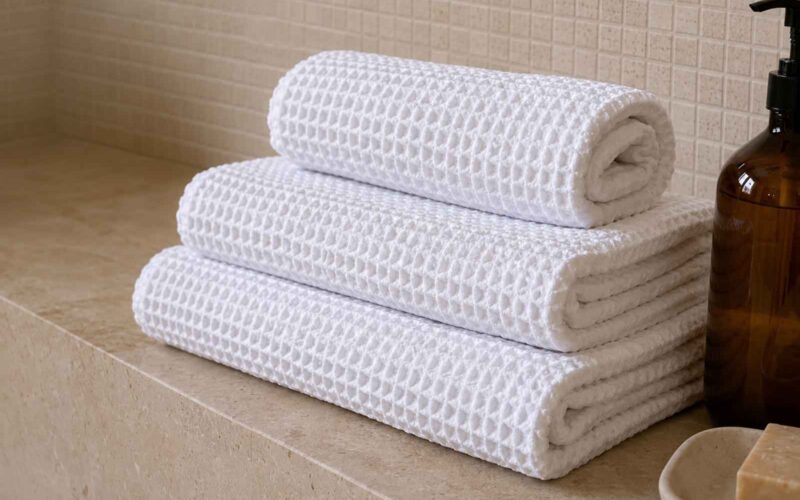
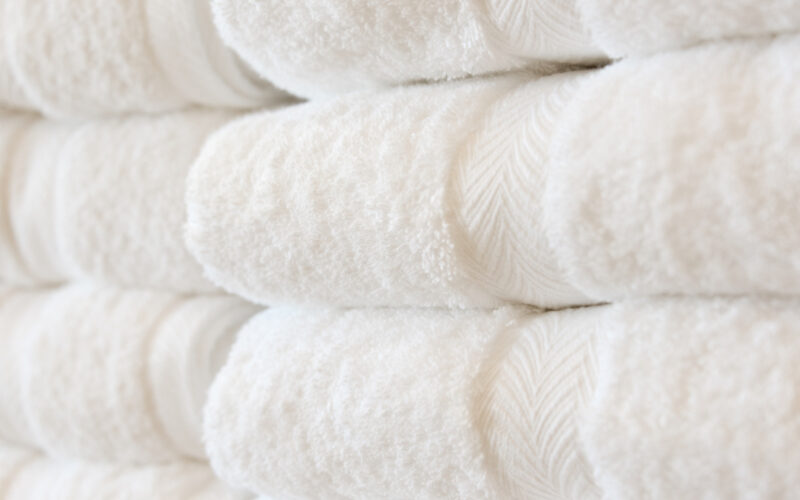
Linen has a more open, less elastic weave than cotton, which lets air circulate and reduces that damp feeling after use. Cotton, for its part, is soft from the very first wash, though it does not dry as quickly.
What Are the Main Benefits of Linen Towels?
Greater Absorbency and Quick Drying
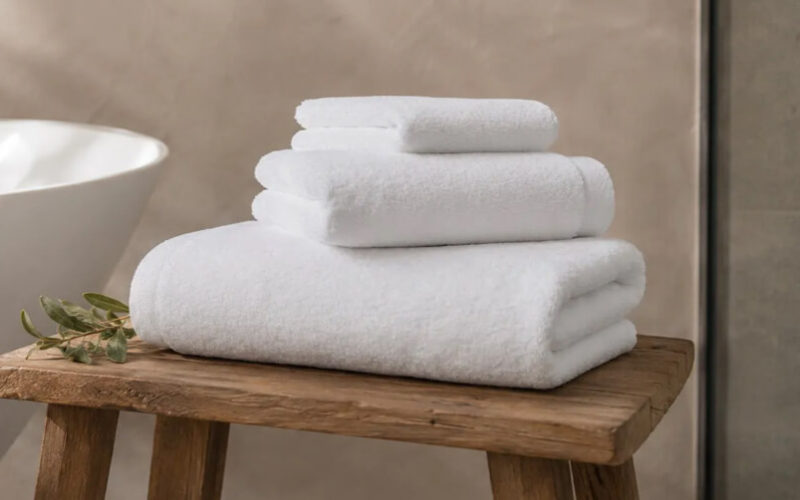
Linen towels take up moisture quickly and dry faster than cotton ones, thanks to the open structure of their fibres. This reduces the sense of damp in the bathroom and makes them easy to live with day to day. They are particularly well suited to a guest bathroom, or to the summer months, when temperatures are higher or the air is more humid.
Antibacterial Properties and Hygiene
Linen has natural antibacterial properties that help prevent odours from developing. This makes it an interesting option for anyone who wants more hygienic bath towels.
Durability and Strength
Linen fibre is stronger than cotton, so the towels keep their shape and their absorbency for longer, even with frequent use and repeated washing.
Cool and Breathable for Summer
Because of its open structure, linen holds less heat than cotton and feels cooler to the touch, which makes it the best choice for anyone who wants light towels in the warmest months.
What to Bear in Mind When Choosing Linen Towels
A Rougher Feel at First
Linen is not as soft as cotton the first few times it is used. That feeling comes from the natural stiffness of the fibre, before washing and use have softened its structure.
Softer With Use
With every wash the linen fibres relax and grow softer, without losing their absorbency. A linen towel will usually feel progressively softer over its first few months of use.
Linen Towels or Cotton Towels: Which Is the Better Choice?
It depends on how the towel will be used and on the way each household lives. These are the main differences between the two materials:
| Feature | Linen towel | Cotton towel |
|---|---|---|
| Absorbency | High from the first use | High, improves after several washes |
| Drying | Fast, holds little moisture | Slower |
| Feel | Rougher at first, softens with use | Soft from the first use |
| Durability | Very high | High |
| Coolness | Breathable, ideal for summer | Warmer to the touch |
For poorly ventilated bathrooms or humid climates, linen helps reduce the humidity in the room and dries quickly, which stops odours from developing. For anyone who puts immediate softness first, cotton remains a sound choice.
How to Care for and Wash Linen Towels
Linen can be machine washed at home, ideally in lukewarm water and without too much detergent, which can affect the softness of the fibre over time. It may shrink slightly in the first wash, so check the care label and avoid tumble drying on a high heat. Air drying is best, as it helps the towels keep their texture and colour over the years.
You will find the rest of the range, in all its qualities and sizes, in our bath linen collection.
Frequently Asked Questions

Do linen towels absorb more than cotton towels?
Not necessarily: it depends on their weight. They do, however, absorb moisture from their surroundings more efficiently and dry faster than cotton, thanks to the open structure of their fibres.
Are linen towels antibacterial?
Linen has natural antibacterial properties that make it harder for odours to develop, even when a towel is slow to dry. They are no substitute for regular washing, but they add an extra layer of hygiene compared with other bathroom textiles.
Why do linen towels get softer over time?
The initial stiffness comes from the natural structure of the linen fibre, which is firmer than that of newly made cotton. With the first washes and daily use, the fibres relax and the towel gradually becomes softer.
Does linen shrink in the wash?
Linen may shrink slightly, especially in the first wash. Washing in lukewarm water and avoiding high-heat drying helps the towel keep its original dimensions and its quality over time.
Are linen towels good for summer?
Yes. Summer is when linen towels really come into their own. Their breathable structure holds less heat than cotton, making them a cooler choice for the bathroom in the warmest months. Many people also choose them for their natural elegance, or to play with contrasting textures by pairing them with cotton pieces.
How long do linen towels last?
With the right care, a linen towel can last longer than a cotton one, as the fibre is more resistant to wear. How long it lasts depends on how it is washed and how often it is used.