

Fabrics & Fibres
The Difference Between Merino Wool and Virgin Wool
Published on 03/03/2026
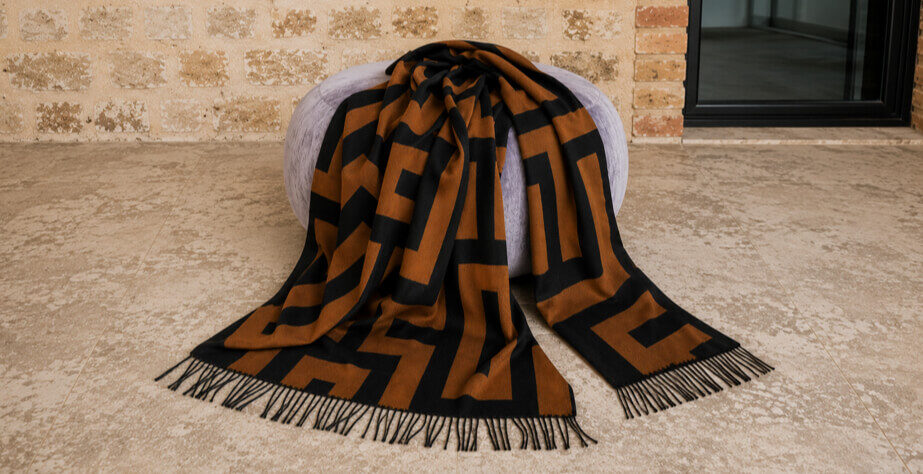
Merino wool and virgin wool are both reference raw materials in high-quality textiles, but they answer to different criteria: one names the breed of sheep, the other the state of the material. Understanding that difference is what lets you choose woollens, blankets, throws or home textiles with real judgement.
What Is Virgin Wool?
Virgin wool is wool taken directly from the sheep by shearing, without having been recycled or blended. The term names neither breed nor fineness: it describes the state of the material.
Its structure keeps the natural scales and the lanolin of the fibre intact. Virgin wool holds on to its strength, its high elasticity and its ability to recover its shape, which is what makes it durable in blankets, throws and high-quality home textiles. Against recycled wool — shorter, damaged fibres — it produces cloth that is stronger and regulates temperature better.
What Is Merino Wool, and Why Does It Stand Out?
Merino wool is a specific type of virgin wool, taken exclusively from merino breeds of sheep. Its principal advantage is the fineness of its fibres: between 15 and 24 microns in diameter, against the 30 to 40 microns or more of a standard wool. That difference determines the sensation, the comfort and the performance of the cloth.
The most highly regarded merino breeds come from Spain — where the merino was developed in the Middle Ages — along with New Zealand, Australia and Patagonia. New Zealand produces merino wools with fibres below 18 microns, the ultrafine merino category.
Its key properties:
- Extreme softness. Merino fibres below 20 microns do not activate the skin’s itch receptors.
- Active temperature regulation. The hollow structure of the fibre traps heat in the cold and releases it in the warmth.
- Moisture management. It absorbs up to 30% of its weight in moisture without feeling damp. Lanolin has antibacterial properties.
- High elasticity. The structure of the fibre reduces distortion through use and washing.

Merino Wool vs Virgin Wool: A Direct Comparison
| Characteristic | Merino wool | Virgin wool |
|---|---|---|
| Fibre fineness | 15–24 microns | Variable: 20–40+ microns |
| Softness to the touch | Very high, does not itch | Varies by breed |
| Thermal regulation | High, at little weight | High, greater insulating mass |
| Breathability | Excellent | Good |
| Care | Machine wash at 30 °C | Preferably by hand |
| Best used for | Beds, technical clothing, luxury | Blankets, coats, the home |
Fibre fineness is the difference that matters most. Below 25 microns, fibres do not activate the itch receptors; above that, the prickling sensation appears with more or less intensity. All merino wool is virgin wool if it has not been processed, but not all virgin wool is merino.
When to Choose Merino Wool, and When Virgin Wool
For garments in direct contact with the skin — base layers, jumpers, scarves — merino wool is the reference choice: softness, moisture management, comfort over long wear. For thick blankets or outdoor coats, virgin wool offers greater insulating mass.
In high-end home textiles and hospitality — bed blankets, duvet fillings, hotel and marine projects — merino stands out for the way it regulates temperature through the night, for its softness and for its resistance to frequent washing. At Matarranz we work with both types of wool. On our website you will find a wide range of home textiles made in these cloths, among them blankets and throws. Our team can advise you, if you need it, on which piece suits you or your project best. Explore the Matarranz throws and blankets collection.


Frequently Asked Questions About Merino and Virgin Wool
Does merino wool itch?
Merino wool does not itch. Its fineness — below 20 microns — prevents it from activating the itch receptors. Fibres above 30 microns can produce that sensation. Virgin wool may or may not itch, depending on the breed and the thickness of the fibre.
Which is warmer, merino or virgin wool?
Virgin wool is warmer, because of its greater insulating mass. Merino wool warms at less weight and less thickness, thanks to the hollow structure of its fibres, which is more efficient at retaining heat. For bed linen with high thermal performance, merino is the reference choice.
How do you wash merino wool?
Good merino wool can be machine washed on a delicate programme at 30 °C. Standard virgin wool generally needs hand washing or dry cleaning to avoid shrinkage. Drying should be done flat, without aggressive spinning.