


Product Care
How to Wash Towels So They Stay Soft
Published on 10/07/2026
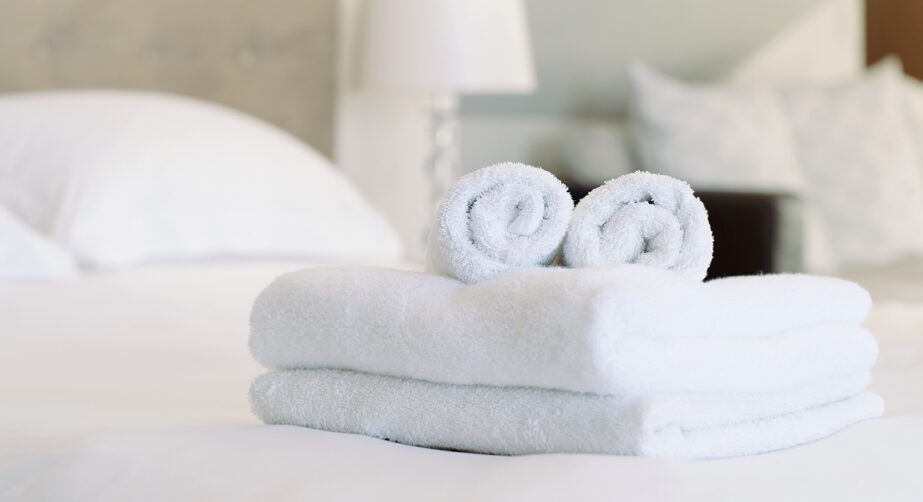
A towel that loses its softness is not always worn out. In most cases the problem is the wash: too much detergent, untreated hard water, or air-drying that mats the terry pile.
This guide explains the techniques for washing towels and keeping them full-bodied, absorbent and in good condition for longer.
Why towels turn rough after washing
Roughness has concrete causes. Identifying them makes it possible to choose the right solution without damaging the texture or the cloth.
| Symptom | Main cause | Solution |
|---|---|---|
| Stiff towel after washing | Excess detergent or built-up limescale | Reduce the amount of detergent |
| Matted pile | Overloading the machine | Wash with the drum at 3/4 of maximum capacity |
| Rough towel after drying outside in the sun | Direct drying in intense heat | Hang towels in the shade, or tumble dry at medium temperature |
| Loss of absorbency | Fabric conditioner residue clogging the fibres | Cut out the fabric conditioner |
| Bad odours after washing | Trapped moisture: towel stored damp or incompletely dried | Make sure they are completely dry before storing |
| Excessive lint in the first washes | Loose fibres from the new pile, normal in pure cotton | Wash alone the first time; it reduces after 2–3 washes |
How to wash towels correctly: step by step
- Separate by colour and type of cloth. Never mix towels with microfibre towels or with garments with zips. The friction damages the pile.
- Use the minimum quantity of detergent. Most manufacturers recommend between 65 and 100 ml for a full load. Excess detergent does not clean better: it builds up in the fibres and hardens the cloth.
- Select the right programme. No more than 40 °C for ordinary use, preferably on a long cycle.
- Do not overload the drum. Towels need room to move and rinse properly. 3/4 capacity maximum.
- As a final step: dry immediately. Do not leave towels damp in the drum. Moisture encourages bacteria and bad odours.
How to wash new towels the first time
Brand-new towels carry the dressings of their manufacture, which need to be removed with the first wash before use. The first wash removes that residue and also the initial lint from the pile.
Protocol for the first wash
- Wash alone, without mixing with other items.
- Water at 40 °C maximum, long-cycle programme.
- Use a small quantity of mild detergent and avoid fabric conditioner.
- Dry thoroughly before use, in a tumble dryer on a long cycle or naturally.
Pure cotton towels gain softness and absorbency over the first washes. This is normal behaviour in the texture of the material, not a manufacturing defect.
How to recover hard or matted towels
Towels that have built up residues of limescale, fabric conditioner or excess detergent need a recovery wash before returning to the usual cycle.
Recovery wash with vinegar and bicarbonate of soda
- 6. First wash: without detergent, with a cup of white cleaning vinegar (200 ml) in the fabric conditioner compartment. Full programme at 40 °C maximum.
- 7. Second wash: without detergent, with 100 g of bicarbonate of soda added directly to the drum. Full programme at 40 °C maximum.
- 8. Drying: in a tumble dryer at medium temperature, or hung in the air with good ventilation. Do not fold until they are completely dry.
This protocol dissolves limescale deposits, neutralises bad odours and reactivates the pile. Do not mix vinegar and bicarbonate of soda in the same wash: they cancel each other out.
Detergent, vinegar, bicarbonate of soda and fabric conditioner: what to use and what to avoid
Quantity of detergent
Always use less than the manufacturer indicates. The standard quantity of detergent is intended for loads of heavily soiled laundry. For towels, excess detergent is not completely removed in the rinse and forms a layer that hardens the pile and reduces the freshness of the cloth. For high-quality cotton towels, a mild liquid detergent is preferable to powder.
White cleaning vinegar
Distilled white vinegar is the most effective alternative to fabric conditioner. Half a cup of vinegar in the fabric conditioner compartment with every wash dissolves limescale deposits, removes detergent residue and keeps the pile soft. It leaves no smell on the towel once dry.
Bicarbonate of soda
Useful for recovery washes and for removing persistent bad odours. Do not use it in every wash: over the long term it can affect the colour of some cloths. Recommended dose: 100 g directly in the drum.
Fabric conditioner: why to avoid it on towels
Fabric conditioner deposits a layer of silicone over the fibres which, in the short term, produces a pleasant sensation but, over time, reduces the capacity for absorbency. It is the most common mistake and the hardest to reverse with ordinary techniques.

How to dry towels so they do not end up stiff
Air drying
- Hang them spread out, not folded over the rail.
- Good ventilation. Avoid prolonged direct sun outdoors: UV radiation degrades cotton and hardens the pile.
- Shake the towel before hanging, to open the pile and improve the freshness of the cloth.
Tumble dryer
The tumble dryer is the option that best preserves the softness of the pile. Medium temperature on a long cycle.
Do not put towels away until they are completely cool and dry. Residual moisture is the main cause of bad odours.
How the quality of the cotton influences softness and texture
Correct care preserves softness, but the length of the fibre is the factor that determines the texture over the long term. That is why at Matarranz we always use extra-long-staple Egyptian cotton at a high weight, for its great softness, capacity for absorbency and high durability.
A quality towel, well cared for, can keep its properties for between 5 and 10 years as time passes. If deterioration comes sooner, the problem usually lies in the washing. Investing in a high-quality cotton towel guarantees a starting point that correct care can extend for years.
If you want to renew your towels with a guarantee of quality, discover our towel collection.
Frequently asked questions
Why not use fabric conditioner on towels?
Fabric conditioner deposits siliconised agents on the cotton fibres. Over the first washes it produces a pleasant sensation, but over time it forms a barrier that reduces the capacity for absorbency.
At what temperature should towels be washed to sanitise them?
60 °C eliminates bacteria, fungi and dust mites. It is the temperature recommended for towels in professional use, in case of illness, or when they have bad odours. For ordinary maintenance washing, 40 °C maximum is enough and preserves the texture of the fibres better over the long term.
Why do towels not absorb after washing?
The most frequent cause is continued use of fabric conditioner, which waterproofs the fibres. Other causes are excess detergent without a complete rinse, and hard water with built-up limescale. The recovery wash with vinegar and bicarbonate of soda resolves the problem in most cases.
How long does a high-quality cotton towel last?
A towel made with extra-long-staple cotton like ours, and given correct care, can keep its properties for between 7 and 10 years. Premature deterioration is usually due to excess detergent, continued use of fabric conditioner, or aggressive drying outdoors in direct sun.