Buying Guides
How to Choose a Wool Blanket for Your Bed: Merino, Mohair, Cashmere or Baby Alpaca
Published on 15/10/2026
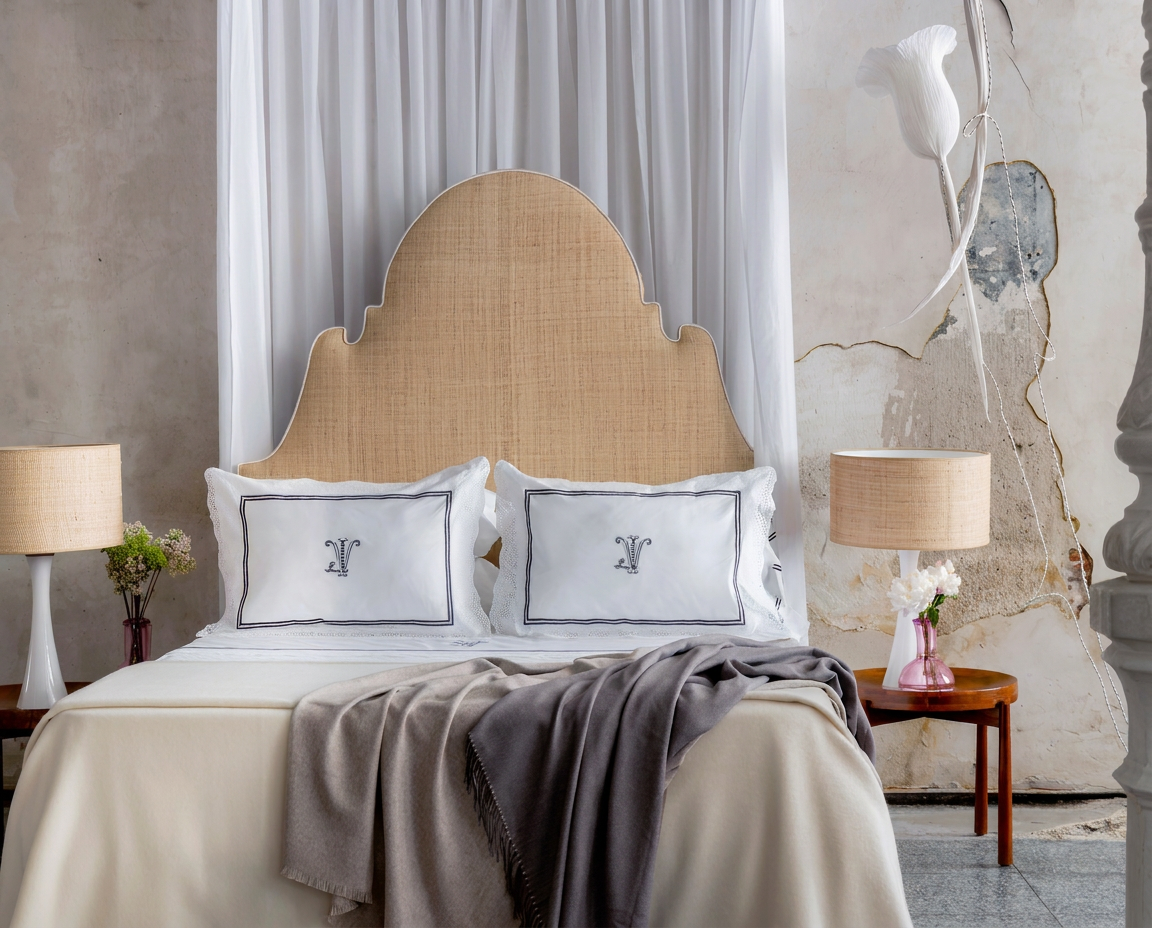
Merino wool, mohair, cashmere and baby alpaca each have their own characteristics, and they are worth knowing before you decide. At Matarranz we work with wool blankets in a range of fibres, paying particular attention to their quality, their handle and the character of each piece. This guide looks at what sets each one apart and which might best suit each bedroom.Wool Blankets for the Bed: What to Consider Before You Choose
No single fibre is right for every bedroom. The temperature of the room and the level of warmth you are after matter, but so do the blanket’s weight, its texture, its proportions and how it works with the rest of the bed linen.
A blanket can be the main warm layer or play a more decorative role, laid across the foot of the bed. Settling that use first makes it easier to choose the right fibre, size and finish.
| Fibre | Main characteristics | Warmth and weight | Look and texture | Best for |
|---|---|---|---|---|
| Merino wool | Fine, soft, temperature-regulating fibre. | Balanced warmth, medium weight. | Soft, understated, matt finish. | Versatile blankets for any bedroom style. |
| Mohair | Light, voluminous Angora goat fibre. | High warmth without excess weight. | Lofty texture with a natural sheen. | Adding depth, texture and presence to the bed. |
| Cashmere | Exceptionally fine, soft, insulating fibre. | High warmth, very low weight. | Silky feel and refined appearance. | Elegant bedrooms prioritising softness and lightness. |
| Baby alpaca | Fine, soft fibre without lanolin. | High warmth, very low weight. | Light, natural look in various shades. | Classic or modern bedrooms seeking lightweight warmth. |
-
Merino Wool, the Most Versatile Fibre for the Bedroom
Merino wool strikes a good balance between warmth, weight and softness, which makes it particularly versatile in the bedroom and easy to pair with sheets, duvet covers and bedspreads in different styles.
It comes from Merino sheep, historically bred in Spain and now also raised in countries such as Australia and New Zealand. Its fine fibre makes blankets that are soft and pleasant to the touch, and good at regulating temperature.
Visually, merino wool has a more understated, matt finish than other fibres.
-
Mohair: Volume and Sheen Without Excess Weight
Mohair stands out for the volume, warmth and natural sheen it brings while staying light. It comes from the hair of the Angora goat and has a distinctive appearance that gives the blanket a particular presence in the bedroom.
The surface of the fibre reflects light differently from merino wool, hence its slightly lustrous finish.
Its texture and volume make mohair especially interesting when the blanket is part of the look of the bed as well as a source of warmth. Over plain bed linen in neutral tones, it can add depth and become one of the focal points of the whole.
-
Cashmere: Lightness and Exceptional Softness
Cashmere comes from the undercoat of the Cashmere goat and is one of the most highly prized natural fibres for its softness, lightness and insulating capacity.
Its limited production and the fineness of the fibre go a long way towards explaining its value. The result is warm blankets with very little weight and a particularly soft, silky handle.
In the bedroom, cashmere works especially well when the aim is a discreet, refined piece. Its texture alone gives the bed presence, so it has no need of eye-catching designs. In natural tones, beige, ecru or grey, it sits easily in bedrooms with a calm, timeless aesthetic.
-
Baby Alpaca: Warmth With Very Little Weight
Baby alpaca is a fine, soft fibre that is particularly warm for its weight. The name refers to the fineness of the selected fibre, not necessarily to the age of the animal.
Unlike sheep’s wool, alpaca fibre contains no lanolin, which may make it an interesting option for people who are sensitive to it. Its structure holds in warmth without the need for a particularly heavy blanket.
Its soft, light appearance works as well on beds with contemporary lines as in more classic bedrooms. The fibre’s own natural shades (ecru, camel, tan, brown and grey) also make it easy to create very harmonious colour combinations.
Which Wool Blanket to Choose for Your Bedroom
The most suitable blanket will depend largely on the bedroom itself, the feel you want from the blanket and the role it plays in the bed as a whole. Room temperature, level of warmth, weight and the visual result are some of the things worth weighing up.
As a guide:
- Cold bedrooms, or rooms without constant heating: cashmere or baby alpaca, when you want a high level of warmth without adding too much weight.
- A bedroom in everyday use: merino wool, for its balance of warmth, weight and softness.
- Mild bedrooms, or for spring and autumn: mohair, especially if you want a light piece that also adds texture and visual volume.
- For people sensitive to lanolin: baby alpaca, as the fibre contains none.
- Bedrooms with a classic, timeless aesthetic: cashmere or merino in neutral tones, easy to combine with the rest of the textiles.
- Bedrooms where the blanket takes a more decorative role: mohair, or designs with texture and patterns that create contrast against a simpler base.
The main differences between the four fibres can be summed up as follows:
| Fibre | Warmth | Weight | Texture and look | Effect on the bed |
|---|---|---|---|---|
| Merino | Balanced | Medium | Soft and matt | Understated and versatile |
| Mohair | High | Medium to light | Volume and natural sheen | Textured, with presence |
| Cashmere | High | Very light | Very soft and silky | Refined and light |
| Baby alpaca | High | Very light | Soft and delicate | Natural and enveloping |
What Size of Blanket to Choose for Your Bed
The size of the blanket affects both warmth and the visual balance of the bed. Before settling on dimensions, it is worth deciding whether it will cover the whole bed or sit at the foot as a decorative piece.
| Uso de la manta | Proporción recomendada | Efecto en la cama |
|---|---|---|
| Para cubrir la cama | Cubrir el colchón con caída a ambos lados. | Envolvente y tradicional. |
| Sobre colcha o edredón | Algo más pequeña que la ropa de cama principal. | Añade abrigo sin ocultar otros textiles. |
| A los pies de la cama | Formato estrecho y colocado transversalmente. | Aporta color y textura sin recargar. |
| Como plaid decorativo | Pieza pequeña, doblada o colocada informalmente. | Ligero y decorativo. |
| Camas de medidas especiales | Adaptada a las dimensiones de la cama. | Caída equilibrada y proporcionada. |
Beyond the width of the mattress, there are other points to bear in mind:
- The height of the bed: the higher it is, the more important it is to work out the blanket’s drop correctly.
- The effect you are after: a generous drop creates a more enveloping look; a blanket folded at the foot gives a lighter, tidier result.
- The other layers: if there is a bedspread, or a duvet in its cover, the blanket does not need to cover the whole bed.
- Large beds: on king-size, super king or non-standard beds, a made-to-measure blanket helps keep the proportions balanced.
Colours, Patterns and Textures: How to Bring the Blanket Into the Bedroom
As well as providing warmth, a blanket can reinforce the look of the bedroom. When choosing one, it is worth considering the room as a whole and not just the piece on its own.
- Neutral tones for a calm result. Ecru, beige, camel, tan and grey sit easily with white or neutral bed linen and help create a timeless composition.
- Colour for contrast. A blanket in a stronger shade can break up a monochrome bed and pick up other elements in the room, such as cushions, curtains or the headboard.
- Patterns for character. Checks, stripes and herringbone work particularly well when the sheets, bedspread or duvet cover are plain. If the bed already has several prints, a plain blanket helps balance the whole.
- Textures for depth. Not all fibres produce the same visual effect: merino has a more matt finish, while mohair brings more volume and sheen. Cashmere and baby alpaca have a softer, lighter appearance.
- Proportion for balance. A blanket with a lot of volume or a strong pattern will have more visual presence, so it may work better with simpler bed linen.
When it comes to how to dress a bed, the blanket can act as the final layer, bringing contrast or continuity depending on the colour, texture and pattern chosen.
The Craft Behind a Quality Wool Blanket
In a wool blanket, quality does not depend on the fibre alone. The making, the fringing, the seams and the final finish also determine how the piece drapes and how it sits on the bed.
These details matter even more when working to special sizes. Adapting the proportions keeps the balance between the blanket, the mattress and the rest of the textiles, especially on king-size, super king or non-standard beds.

Frequently Asked Questions About Wool Blankets for the Bed
Which wool blanket is warmest without being too heavy?
Cashmere and baby alpaca stand out for providing a high level of warmth with little weight. Mohair also gives warmth while feeling light, although it looks more voluminous. Merino wool offers a balance between weight and warmth.
Is merino wool or cashmere better for sleeping?
It depends on personal preference and on the bedroom. Merino wool offers a balance of warmth, weight and versatility, while cashmere stands out above all for its lightness, softness and insulating capacity. Neither is necessarily a substitute for the other: they answer to different sensations and uses.
What size should a bed blanket be?
It depends on whether it will cover the bed or serve mainly as a decorative element. In the first case, its proportions should comfortably cover the mattress and allow some drop at the sides. For the foot of the bed, a narrower format or a throw is a good choice.
How do you match the colour of the blanket to the bed linen?
One option is to stay within the same colour range and play with different intensities and textures. Another is to use the blanket as a point of contrast against neutral bed linen. Either way, it is worth taking other elements of the bedroom into account too, such as the headboard, cushions or curtains.
How can you tell a pure new wool blanket from a blend?
The composition shown on the label is the reference for the percentage and type of fibres used in the blanket. If you are looking for a pure new wool piece, check that the composition states 100% of this fibre.
What is the difference between a wool blanket and a wool throw?
The main difference usually lies in size and use. A bed blanket is designed to provide wider coverage, while a throw tends to be more compact and can be placed at the foot of the bed, over an armchair or on the sofa. Both can share the same fibres, colours and finishes.