


Guías de compra
The Difference Between an Eiderdown and a Duvet
Published on 05/06/2026
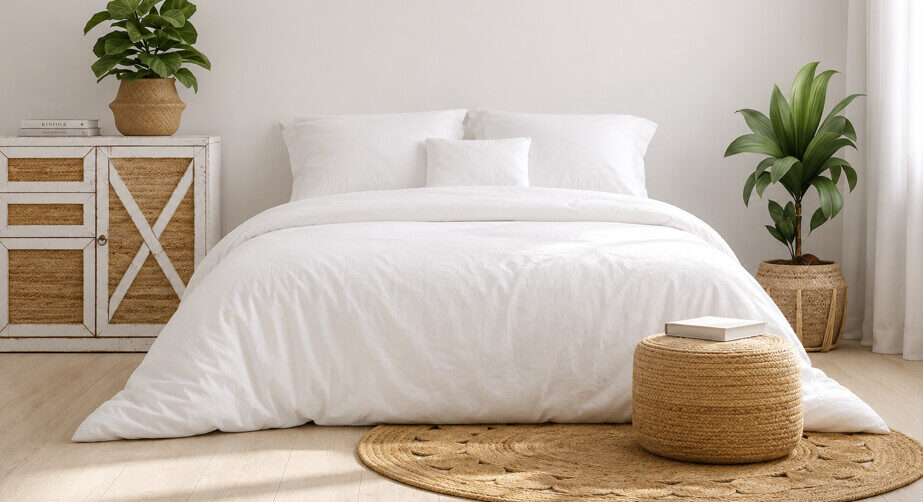
An eiderdown and a duvet perform the same function — providing warmth during rest — with a completely different structure and system of use. Confusion between the two terms is frequent in Spain: they are sometimes used as synonyms when they designate different products.
What is an eiderdown, and what is a duvet?
The eiderdown: a single piece with integrated design
A single piece formed of two layers of cloth with the filling sewn inside: synthetic fibre, feather, cotton or mixed materials. The exterior design is part of the product, visible without any additional cover.
The duvet: an independent filling for an interchangeable cover
A duvet — also called a duvet filling — is an independent bed filling that goes inside an interchangeable duvet cover. The cover is the visible piece. This system, of Scandinavian origin, allows the look of the bed to be renewed by replacing only the cover. The weight — in g/m² — determines its capacity for warmth.
What are the main differences between an eiderdown and a duvet?
| Characteristic | Eiderdown | Duvet |
|---|---|---|
| Structure | Single piece with sewn-in filling | Cover + separate filling |
| Cover | Not required | Requires a duvet cover |
| Weight / adaptability | Fixed according to model | Adaptable; four-seasons system |
| Design | Integrated into the piece | Given by the cover, interchangeable |
| Maintenance | Washing of the complete piece | Cover frequently; filling occasionally |
| Hospitality | Middle categories | Standard in the high categories |

Which is warmer, the eiderdown or the duvet?
The capacity for warmth does not depend on the format but on the type of filling and the weight. A goose down duvet at 400 g/m² is warmer than any eiderdown with a standard synthetic filling. The four-seasons system — two combinable pieces — allows the warmth to be adjusted through the year.
Both take different types of filling:
- Goose down: maximum capacity for warmth at minimum weight. The standard in luxury hospitality.
- Feather: good thermal capacity at a lower density than pure down.
- Microfibre: hypoallergenic synthetic filling. Washable at home.
- Wool: regulates temperature actively. Suitable for people who perspire at night.
- Cotton: breathable and light in warmth. Common in warm climates and in summer.
Which is better, an eiderdown or a duvet, according to use?
An eiderdown suits a constant temperature and a preference for a bed of more formal appearance without interchangeable covers. The duvet is the better option when:
- Ease of maintenance is valued: the duvet cover is washed as often as the sheets; the filling, less frequently.
- Thermal adaptability is sought through the weight or the four-seasons system.
- Personalisation is a priority: changing the cover renews the design without buying a new piece.
- In hospitality, the cover is changed for every stay and the filling is washed less often.
How is a duvet used: with or without a flat sheet?
The duvet system does away with the flat sheet: the cover acts simultaneously as flat sheet and as warm covering. The cover is washed as often as the rest of the bed linen; the duvet filling, two to four times a year. In hotels, the cover is changed for every stay and the filling stays protected.
You will find the Matarranz catalogue of eiderdowns and duvets in our online shop.

Frequently asked questions about the difference between an eiderdown and a duvet
Are an eiderdown and a duvet the same thing?
No. An eiderdown is a single piece with sewn-in filling and a visible design. A duvet is an independent filling that goes inside an interchangeable duvet cover.
Which is warmer, the eiderdown or the duvet?
It depends on the filling and the weight. A goose down duvet at 300–400 g/m 2 exceeds most synthetic-filled eiderdowns in insulation. The four-seasons system offers greater thermal adaptability than an eiderdown of fixed weight.
Can a duvet be used without a duvet cover?
It is not advisable. Without a cover, the duvet filling gets dirty directly, requires more frequent washing and deteriorates sooner.
What type of filling is best for a winter duvet?
For room temperatures below 15 °C, goose down at 300–400 g/m² offers the best warmth-to-weight ratio. For people with allergies, microfibre or siliconised hollowfibre at 400 g/m² with anti-mite treatment is the more suitable alternative. Wool is a good option for anyone looking for natural thermal regulation who tends to perspire.
How long does a good eiderdown or duvet last?
A well-made goose down duvet filling lasts 10 to 15 years. High-density synthetic fillings, 5 to 8 years. The factor that most shortens durability in both cases is inadequate washing: the wrong temperature, or poor drying that mats the filling.